Before you dig: what you need to know about landscaping and line locates

Spring has arrived and many people across Saskatchewan are getting ready to start yard and landscaping projects. Whether you’re building a fence, planting trees, or adding a deck, it’s important to take one key step before you dig: request a line locate.
In 2025, landscaping projects were among the leading causes of underground line hits for homeowners and landowners. Incidents most often involved larger equipment, such as excavators and backhoes, but hand tools also caused damage.
“Any project that disturbs the ground requires a line locate,” says Sheena Nabozniak, SaskEnergy’s Manager of Damage Prevention. “Sometimes gas lines are closer to the surface than people expect.”
What is a line locate?
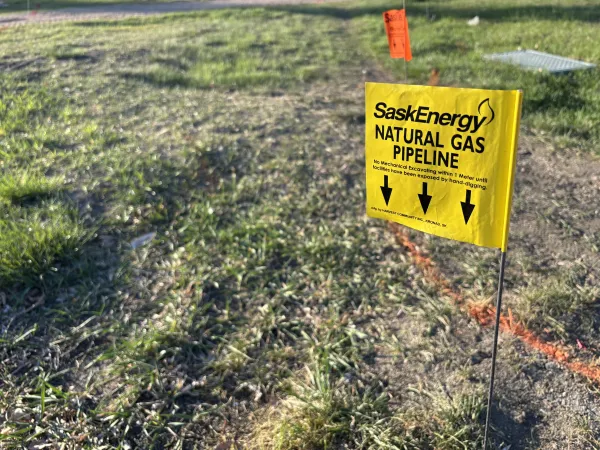
A line locate shows where underground gas and utility lines are located within your project area. After you submit a request, trained technicians mark natural gas lines with yellow flags or paint. You will also receive a record of locate, which explains where the lines are and how you can work safely around them.
“The first step to any landscaping project is to request your line locate,” says Sheena. “Then review the record of locate to make sure your project won’t interfere with any gas lines.”
The record of locate will also tell you if your project needs special permission or permits, and how to apply for them.
Why line locates are important
Hitting a natural gas line can be dangerous and expensive.
“A line locate is our first line of defence in protecting people and infrastructure,” Sheena explains. “Not getting a locate is the number one reason lines are hit, and it’s the easiest step people can take to prevent damage.”
Damaging a gas line can result in:
- Serious safety risks, depending on the type and pressure of the line
- Natural gas service outages for nearby homes or businesses
- Costly repairs and surcharges if a locate was not requested
Getting a line locate is also required by law in Saskatchewan. Anyone disturbing the ground where a gas line may be present must request a locate first. If they don’t, repair costs include additional charges of 50 per cent.
What projects need a line locate?
Nearly all digging projects need one, even small jobs.
“Anything that involves ground disturbance needs a line locate,” says Sheena. “This includes fences, decks, trees, garages — almost everything.”
Gas lines may be shallower than expected, especially in older areas or where the ground level has changed over time.
You should request a locate if you’re planning:
- Fence or gate installations
- Decks, sheds, or play structures
- Tree planting or landscaping beds
- Gardens, ponds, or water features
- Driveways, parking pads, or culverts
Some above ground structures can also cause problems if they are built too close to or directly over a gas line. This can block access for emergency repairs or routine maintenance.
How to plan ahead
Spring is the busiest time of year for line locate requests, so planning early helps avoid delays.
Before you dig:
- Mark your project area, often called “white lining,” using paint, flags, or stakes.
- Submit a free line locate request at least three full working days before digging.
- Review your record of locate carefully once it is issued.
Line locates are valid for 30 days, as long as the markings are still visible.
If you’re unsure whether your project needs special permission, SaskEnergy’s Terms and Conditions of Service, specifically Appendix F, outline safe distances and requirements for working near gas lines.
Sheena says the most common question she hears is when a line locate required. Her advice is simple.
“When in doubt, get a locate,” she says. “Damage prevention is everyone’s responsibility, and we all play a role in keeping our communities safe.”
If something doesn’t seem right, or if you feel unsure about how a contractor is working, SaskEnergy encourages customers to reach out.
“If you’re ever unsure, give us a call,” Sheena adds. “We’re happy to help and make sure your project is completed safely.”
No matter the size of your spring project, planning ahead and requesting a line locate can help prevent serious damage and keep everyone safe.